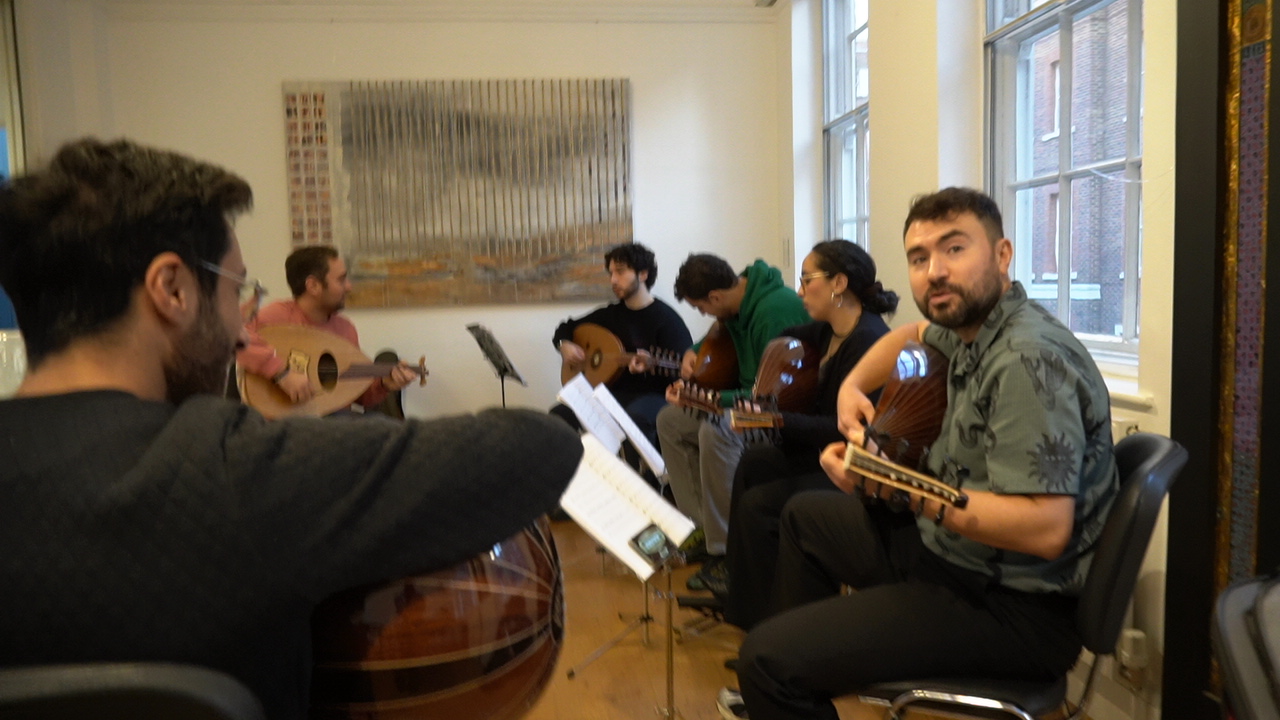
Taqasim School

School Courses

Courses, September – December 2026 term

Ten weeks of teaching from 23 September to 6 December 2026, taught in person in London. Wednesday to Sunday timetable across darbuka and oud, from Beginner to Advanced, plus Arabic Music Theory.

Places are limited. Beginner groups fill first — we open enrolment on the open day and close it when classes are full.

Term dates

Term
23 September – 6 December 2026
10 weeks. One-week half-term break.
Open day
Saturday 13 September 2026, 12:00 – 4:00 pm
In person.
Class size
8 – 12 students

Browse courses

Every course, one page

Level
Course
Beginner

Darbuka Beginners

· Wednesday · 5:00 – 7:00 pm · £350 (10 weeks)

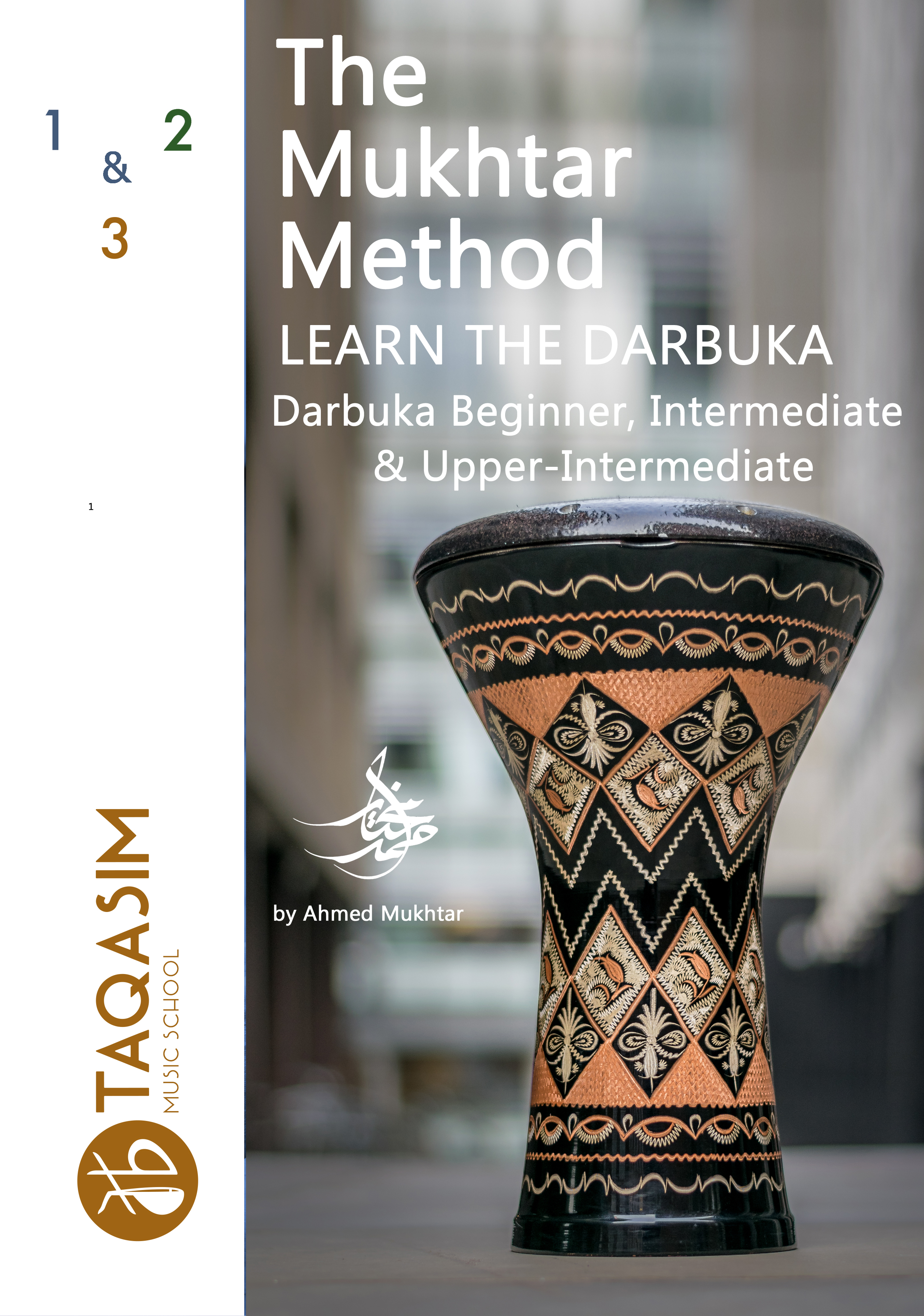
How to hold the darbuka, the correct tones (doum, tak) with right- and left-hand strokes, and the foundational rhythms — Wahda, Maqsoum, Ayyub, Malfouf and Thurayya. Progresses to Darbuka Intermediate. Students must have their own darbuka.

In-person, London 23 Sep – 2 Dec 2026
Advanced

Darbuka Advanced Plus 2

· Wednesday · 7:00 – 9:00 pm · £350 (10 weeks)

For returning students who have completed Darbuka Advanced. Complex polyrhythms, solo and improvisation over recorded and live music, accents and dynamics, ‘Hiwa’ ornamentation and right-hand Mahbus.

In-person, London 23 Sep – 2 Dec 2026 (break 28 Oct)
Intermediate

Darbuka Intermediate

· Thursday · 5:00 – 7:00 pm · £350 (10 weeks)

For students who have completed Darbuka Beginners. New complex rhythms, sound equality, tempo and hand coordination. Humming or singing along while keeping time on the drum.

In-person, London 24 Sep – 3 Dec 2026 (break 29 Oct)
Upper Intermediate

Darbuka Upper Intermediate

· Thursday · 7:00 – 9:00 pm · £350 (10 weeks)

For returning students who have completed Beginner and Intermediate. Complex rhythms and polyrhythms, playing along with recorded and live music, and the first steps into rhythmic improvisation and Taqasim ornamentation.

In-person, London 24 Sep – 3 Dec 2026 (break 29 Oct)
Advanced

Darbuka Advanced Plus

· Friday · 7:00 – 9:00 pm · £350 (10 weeks)

Advanced students learn to play solo with improvisational rhythms over a ground rhythm (Maqsoum, Malfouf, Baladi). Accompanying oud with dynamics and accurate pulse, complex polyrhythms with ‘Hiwa’ and right-hand Mahbus, and playing along with recorded tracks.

In-person, London 25 Sep – 4 Dec 2026 (break 30 Oct)
All levels

Arabic Music Theory I

· Saturday · 11:00 am – 12:00 pm · £175 (10 weeks)

The basic skills to read, write and ‘talk’ music. Rhythms and melodies in notation, recognising maqamaat, and the signs and symbols in a musical score. Recommended alongside the Oud Beginner course that follows at 12:00.

In-person, London 26 Sep – 5 Dec 2026 (break 31 Oct)
Beginner

Oud Beginner

· Saturday · 12:00 – 2:00 pm · £350 (10 weeks)

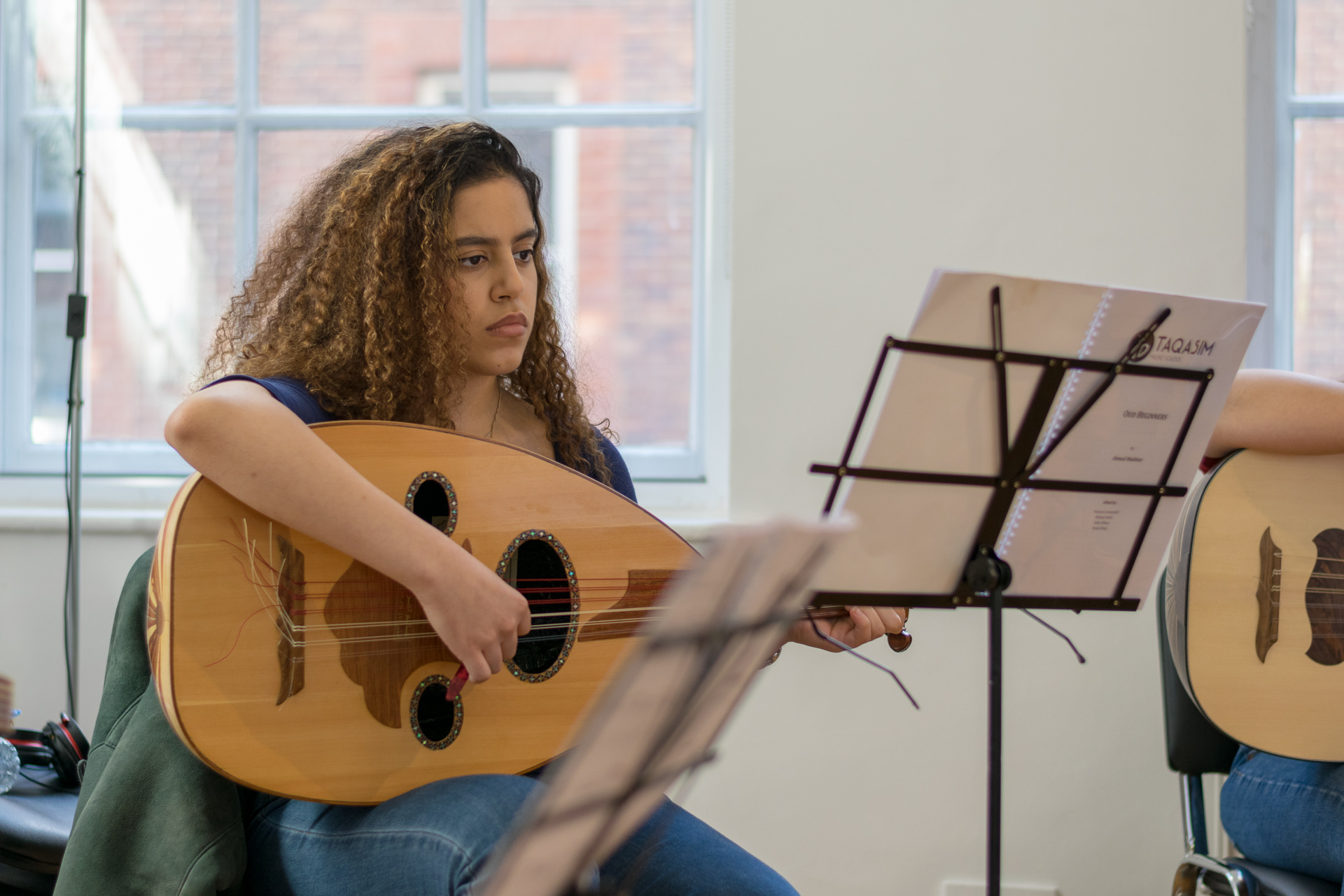
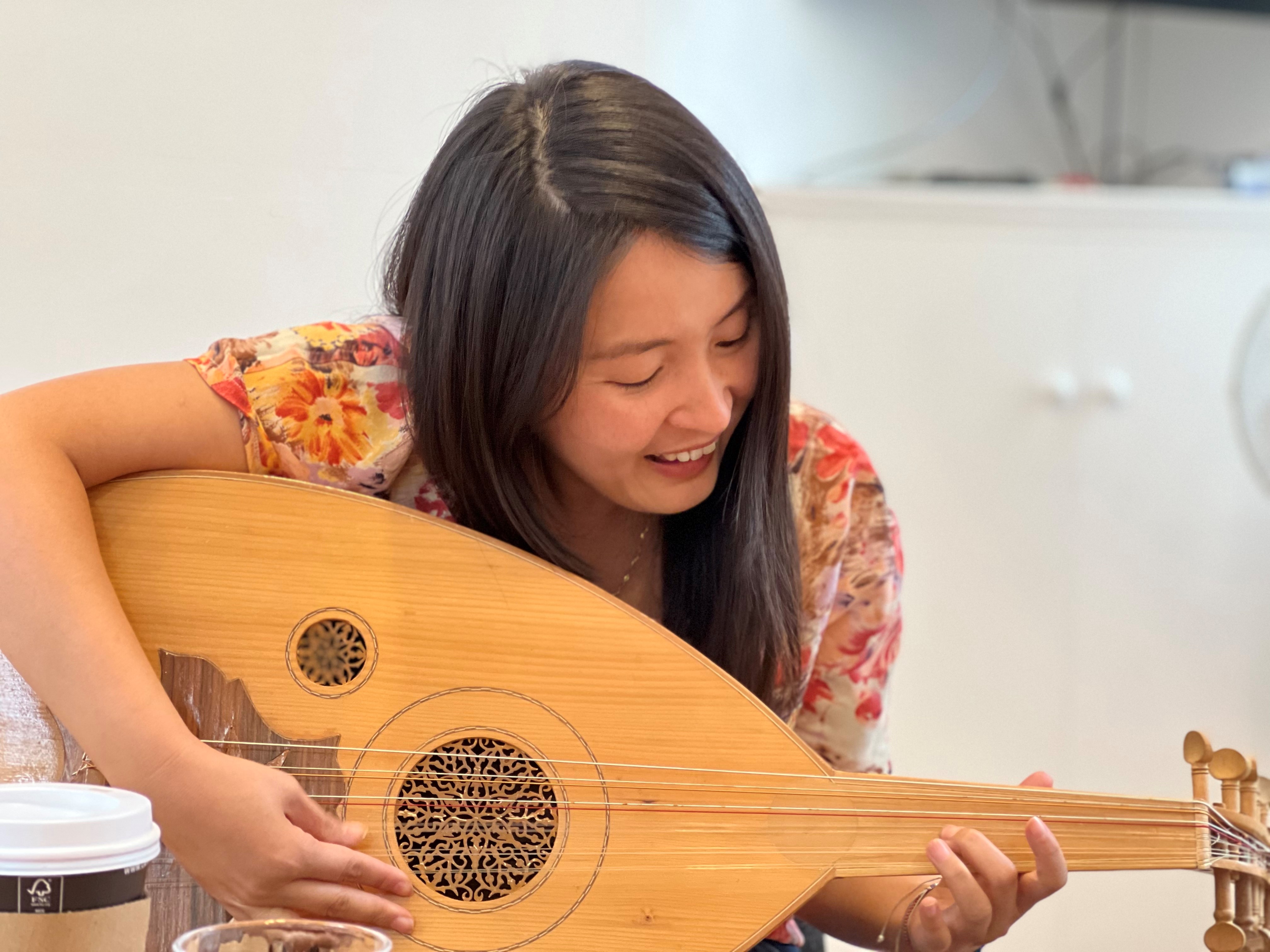
The fundamental techniques of the oud and an introduction to the Maqam Music System, alongside the eight fundamental maqamaat and traditional and popular repertoire. No prior music knowledge required. Students must have their own instrument; teachers can advise.

In-person, London 26 Sep – 5 Dec 2026 (break 31 Oct)
Beginner

Oud Beginner (Group 2, opened later)

· Saturday · 2:00 – 4:00 pm · £350 (10 weeks)

Second Oud Beginner group for students joining later in the term. Same syllabus as Group 1 — fundamental techniques, Maqam system, and traditional and popular repertoire. Students must have their own instrument.

In-person, London 26 Sep – 5 Dec 2026 (break 31 Oct)
Upper Beginner

Oud Upper Beginner

· Saturday · 4:30 – 6:30 pm · £350 (10 weeks)

For students who have completed Oud Beginner (or been assessed by a teacher). Further analysis and transposition of the maqamaat — Nahawand, Ajam, Kurd, Hijaz, Bayat, Rast, Saba and Segah — through traditional songs and pieces.

In-person, London 26 Sep – 5 Dec 2026 (break 31 Oct)
Intermediate

Oud Intermediate

· Saturday · 6:30 – 8:30 pm · £350 (10 weeks)

For students who have completed Oud Upper Beginner. Detailed study of Ajam, Hijaz, Hijaz Kar, Rast and Suznak through traditional repertoire, with technical work on right-hand techniques, left-hand positions and two-octave scales. Daily practice expected.

In-person, London 26 Sep – 5 Dec 2026 (break 31 Oct)
Upper Intermediate

Oud Upper Intermediate

· Sunday · 4:00 – 6:00 pm · £350 (10 weeks)

For students comfortable with the Oud Intermediate material. New maqamaat — Nahawand, Kurd, Lami, Bayat and Bayat Shor — with second-octave techniques and ornamentation. Daily practice expected. Assessment on request.

In-person, London 27 Sep – 6 Dec 2026 (break 1 Nov)
Intermediate & Upper Intermediate

Oud Ensemble I

· Sunday · 6:00 – 8:00 pm · £350 (10 weeks)

Progress performance skills in a group setting. Each class focuses on a single maqam and its repertoire — Ajam, Nahawand, Rast and Bayat — developing tremolos, trills and the use of qarar and jawab. Open to students who have completed Intermediate and Upper Intermediate.

In-person, London 27 Sep – 6 Dec 2026 (break 1 Nov)

Course fees include all teaching materials. The Mukhtar Method books are sold separately. Concessions available for students and OAPs — please ask.

Enquire about a course

Getting started

How to enrol

Three steps from interest to first lesson. We reply by email to every enquiry, usually within two working days.
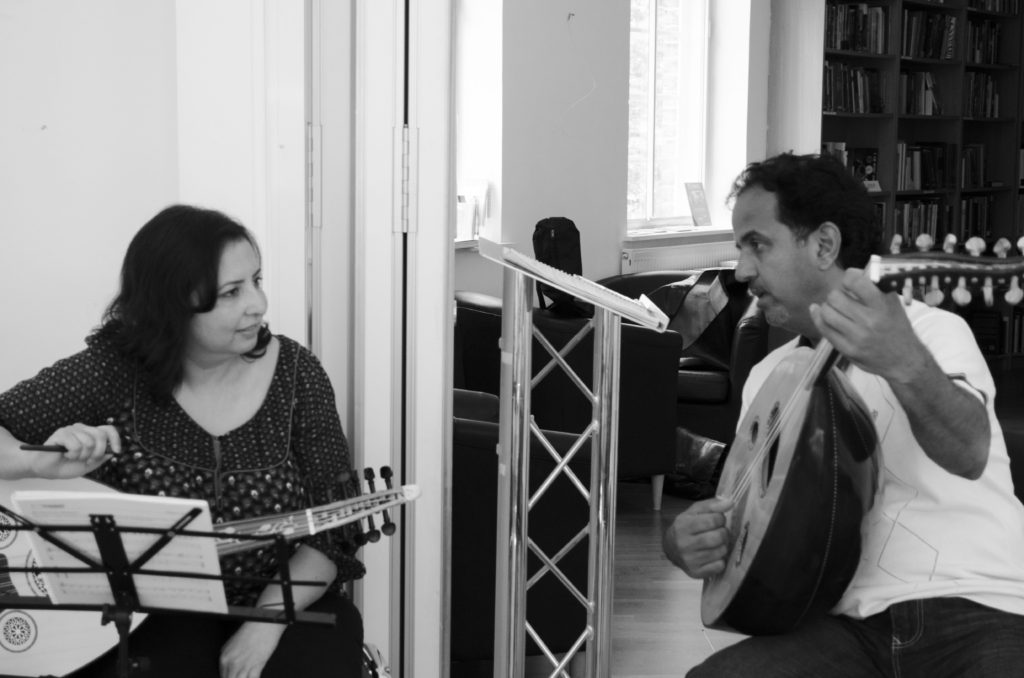
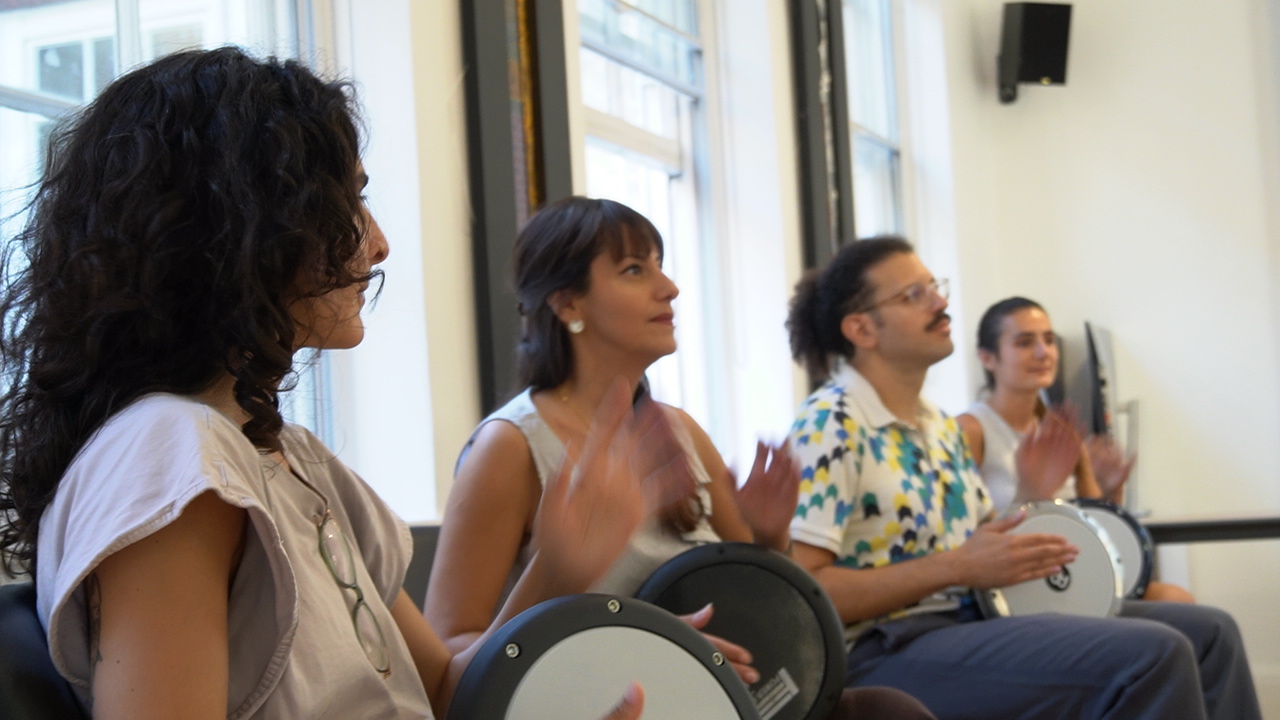
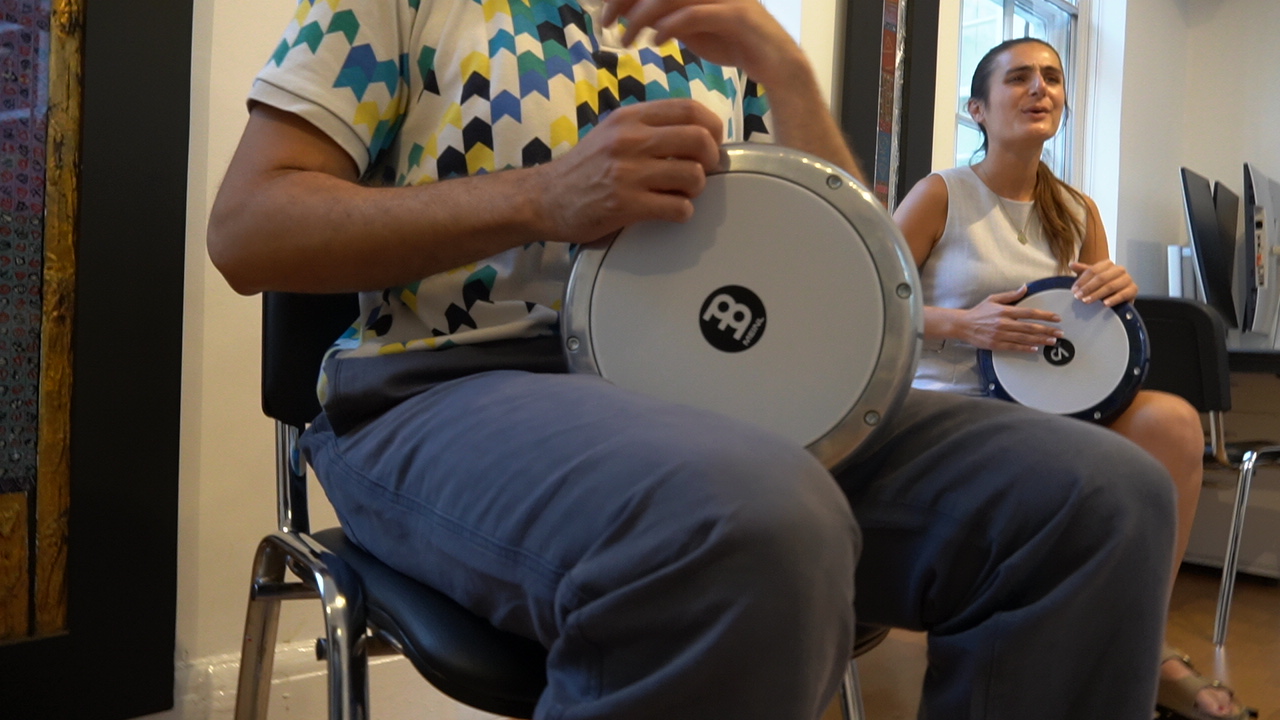
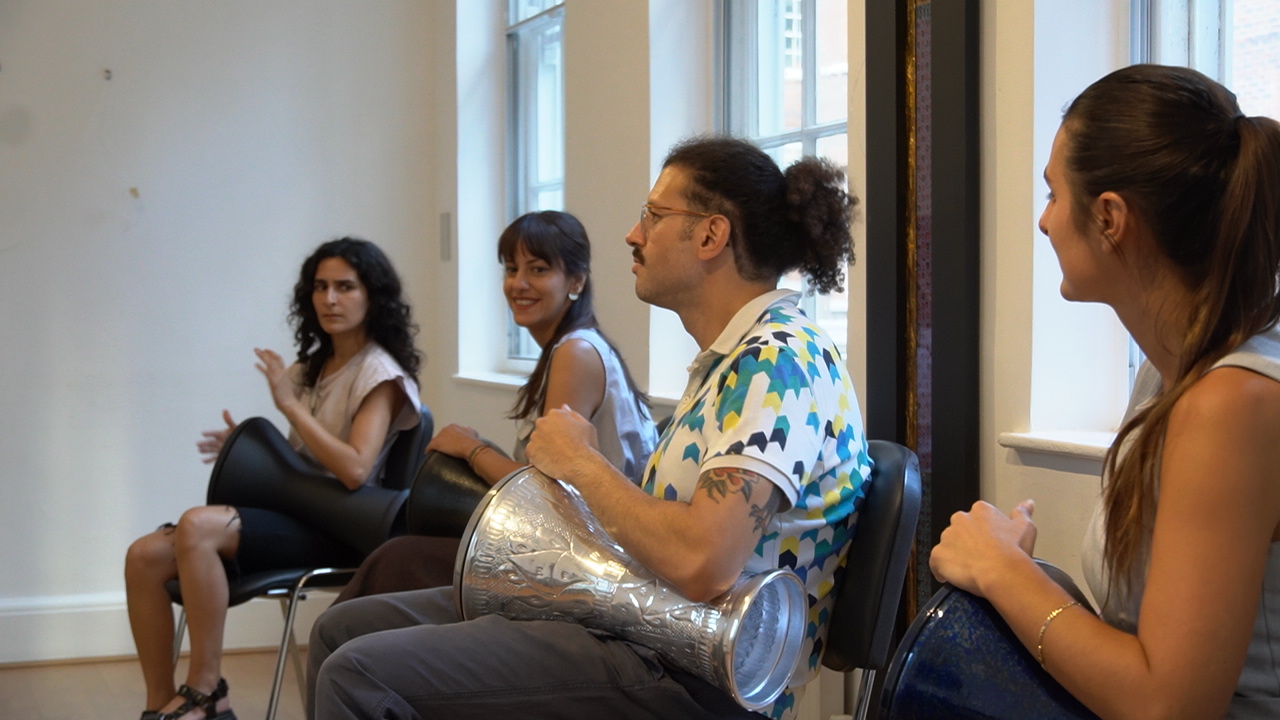
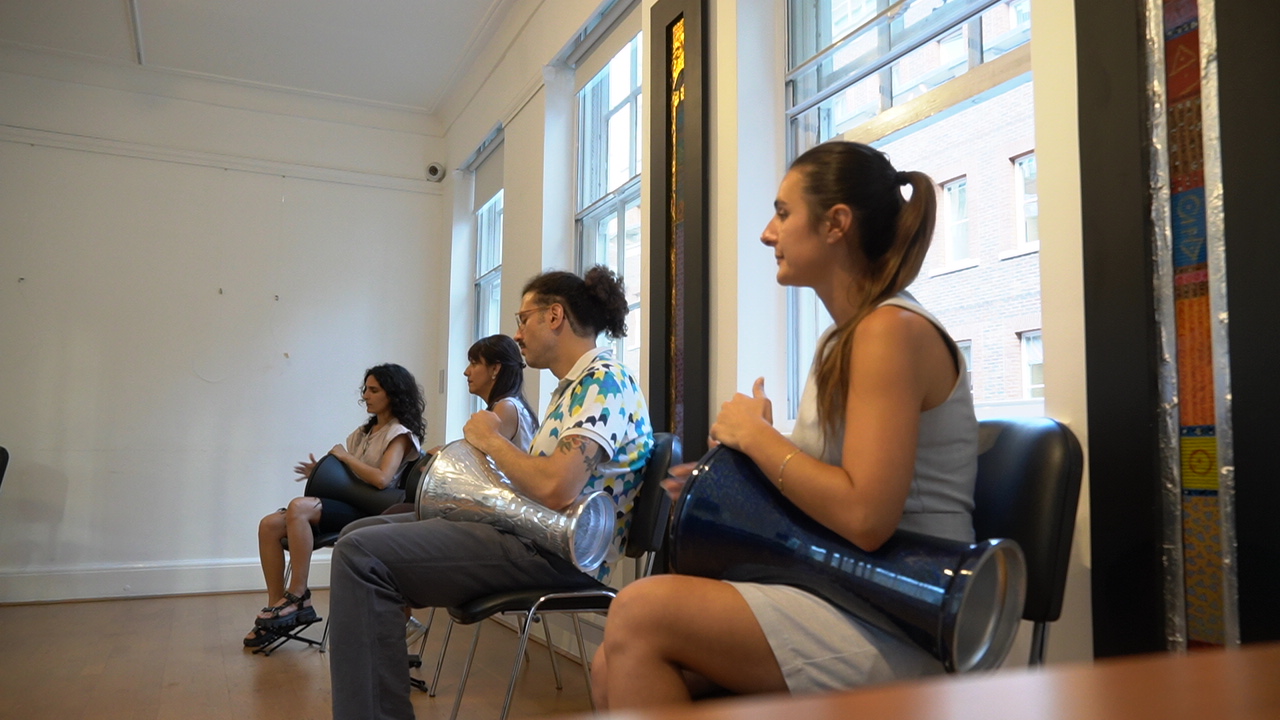
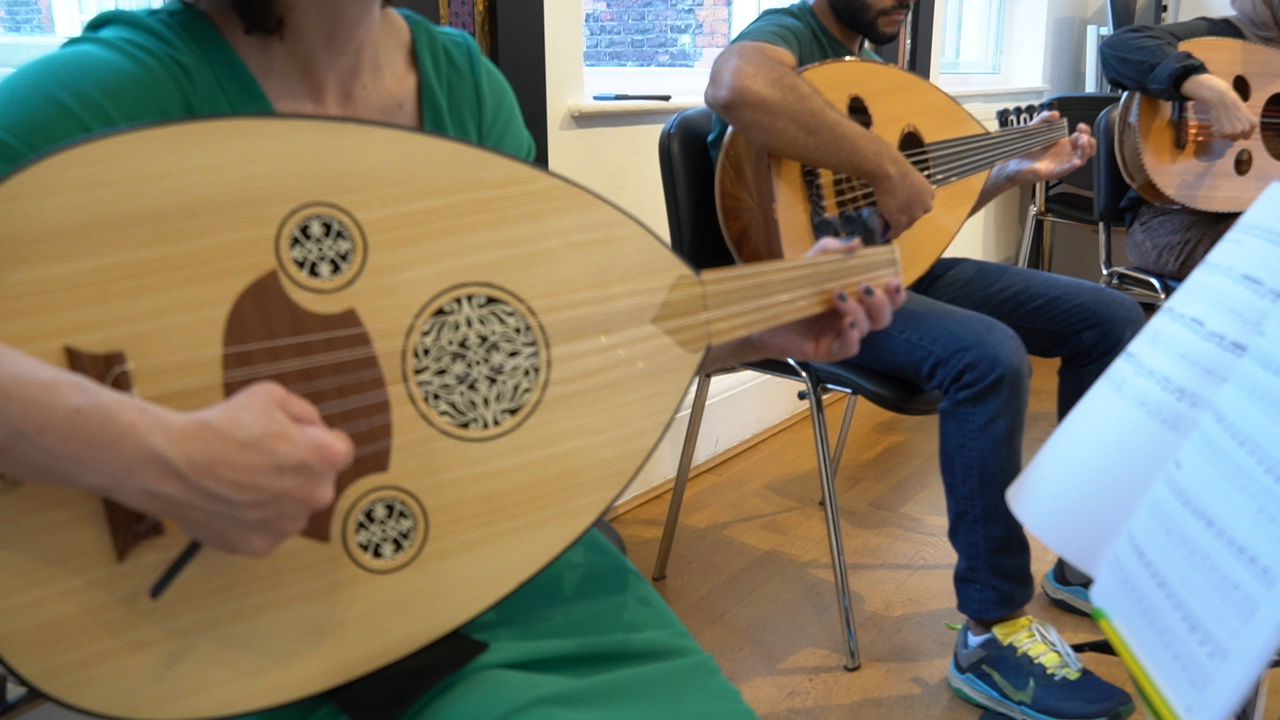
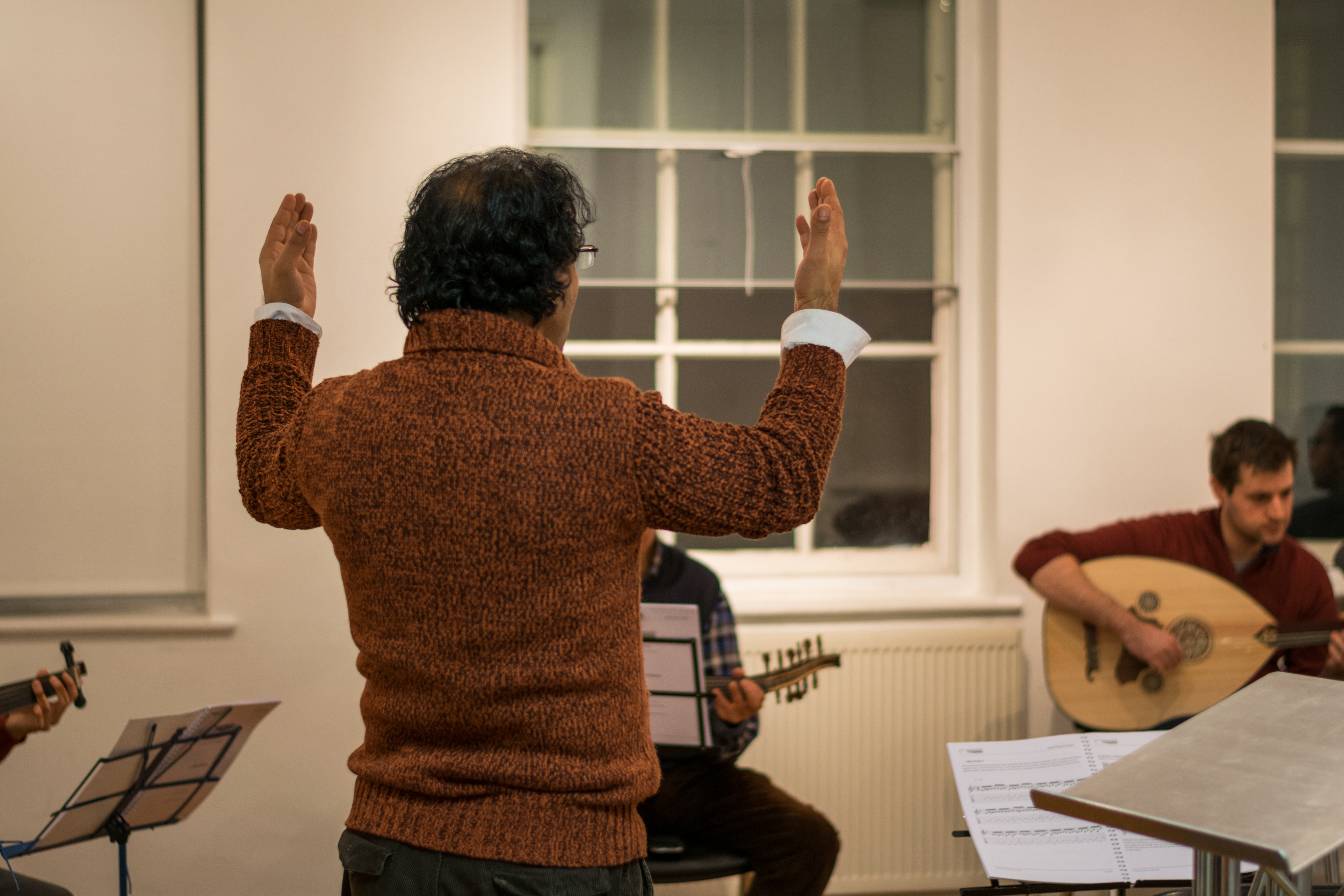
A Taqasim classroom in session.
01

Come to the open day, or send us a note

The open day on Saturday 13 September, 12:00 – 4:00 pm, is the easiest way to meet the teachers, try an oud and ask questions. If you cannot attend, send a short email and we will call or write back.

Email the school
02

Agree the right level

If you have played before, we will arrange a fifteen-minute conversation by phone or video to place you at the right level. Beginners go straight to Beginner.

03

Book and pay for the term

We send a booking link for the course you have chosen, with the term fee due before the first lesson. Concessions apply on request.

View frequently asked questions

Enquiries

Questions before you enrol?

Send a short note. We will write back from the school directly with whichever course suits, or call if you would like to talk it through.